

Best 12 Web Application Firewall Software in 2026
The guide to the best WAF solutions in 2026, featuring key selection criteria and top providers like Imperva and Cloudflare.

With our increasing reliance on the internet, blocking against potential threats have become ever so important. To combat these, Web Application Firewall (WAF) has been developed.
WAF sits between a web application and the internet, inspecting HTTP and HTTPS requests to block threats such as SQL injection, cross-site scripting, malicious bots, and other application-layer attacks before they reach the origin. That is why WAF security is now a core part of modern web application firewall security strategies.
This guide highlights the best WAF tools available today and explains how to compare capabilities, deployment models, and WAF pricing.
Key Considerations for Selecting a WAF
Selecting the right web application firewall tools mean learning your specific needs and the features that various WAF services offer. Here are some critical factors to consider:
Top WAF Software Solutions in 2026
Web Application Firewalls (WAFs) are designed to meet the diverse needs of modern businesses, from those requiring basic protection to those needing advanced, AI-driven security capabilities:
That said, here are the top Web Application Firewalls to go for in 2026:
1. IO River
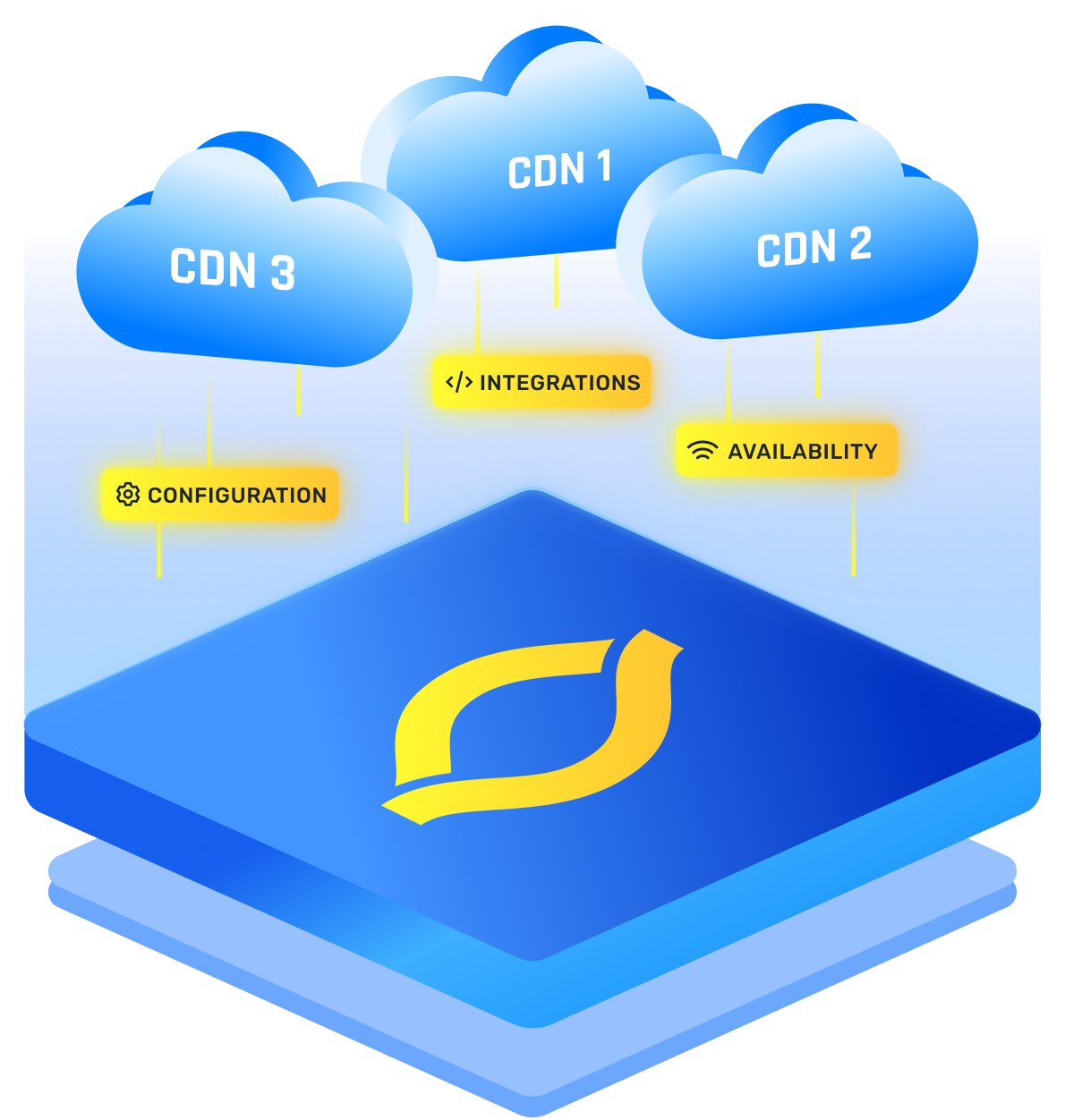
IO River.io takes the top spot here for teams that need WAF protection to stay consistent across multiple CDN providers, not just inside a single vendor stack. On its Unified Security page, IO River’s product is a single WAF that works across every CDN, powered by Check Point, with identical policies, centralized control, and ML-driven protection. These security services are deployed on the edge compute layer of supported CDNs, so protection is applied without adding another network hop or putting IO River in the request path.
That makes IO River especially compelling for multi-CDN and multi-edge environments, where policy drift between providers is often the hardest security problem to solve. IO River’s Managed WAF includes a pre-configured enterprise-grade ruleset for web applications and APIs, with coverage for OWASP Top 10 issues such as SQL injection, cross-site scripting, and insecure deserialization, and that the rules can be tuned for accuracy.
Main Offerings:
- Single WAF Across Multiple CDNs: Apply identical WAF behavior across providers from one centralized control plane, which is IO River’s core differentiator.
- OWASP Top 10 And API Protection: Managed rules protect web apps and APIs against common application-layer attacks, while edge security services also support authentication and schema validation.
- Bot Detection And API Abuse Protection: IO River’s unified security includes malicious bot detection and API abuse protection as part of the stack.
- Centralized Management And Automation: Teams can define WAF rules once and apply them across CDNs from a single interface, with support for REST API, Python API, Go API, and Terraform.
- Global Rate Limiting Without An Extra Tier: IO River documents global rate limiting across multi-CDN traffic without introducing a separate tier that could add latency or become a new point of failure.
2. Imperva WAF
Imperva WAF is designed to protect websites, applications, and APIs from a wide range of online threats, including SQL injection, cross-site scripting (XSS), and DDoS attacks.
It uses advanced AI and machine learning technologies, and offers real-time threat detection and mitigation, ensuring security without compromising on performance. Its cloud-based architecture enables scalable protection making it a reliable shield for businesses of all sizes.
Imperva WAF enriches its offering with features aimed at enhancing compliance, data security, and user experience. It provides detailed analytics and reports that help in understanding traffic patterns and identifying potential vulnerabilities, alongside capabilities for custom security rules and policies tailored to the specific needs of each application
Main Offerings:
- Web Application and API Protection: Robust security measures against a broad spectrum of web attacks and vulnerabilities.
- DDoS Protection: Advanced defenses to mitigate Distributed Denial of Service (DDoS) attacks, ensuring website availability.
- Bot Management: Sophisticated algorithms to distinguish between beneficial and malicious bot traffic, protecting against automated threats while allowing useful bots.
- Compliance and Data Security: Tools and features that aid in complying with regulatory requirements like GDPR and PCI DSS, alongside encryption and data leakage prevention.
- Advanced Threat Intelligence: Access to Imperva's cutting-edge research on cyber threats, providing preemptive protection against emerging vulnerabilities.
3. Cloudflare Web Application Firewall
Cloudflare Web Application Firewall is also designed with machine learning algorithms to offer enhanced security measures across multiple pricing tiers, making it accessible for businesses of all sizes.
It provides robust protection against the top 10 vulnerabilities as identified by the Open Web Application Security Project (OWASP), which includes threats like SQL injection, cross-site scripting (XSS), and more.
The use of machine learning not only improves the efficiency of threat detection but also ensures that the security measures evolve over time, keeping pace with the changing tactics of cyber attackers. The WAF is continually updated via threat intelligence gleaned from trillions of daily requests across its network.
Cloudflare's WAF is part of a huge suite of security services, offering added benefits such as DDoS protection and a content delivery network to enhance user experience.
Main Offerings:
- Machine Learning-Enhanced Security: Improves threat detection over time.
- Protection Against OWASP Top 10: Guards against common vulnerabilities.
- Scalable Pricing Tiers: Accessible to businesses of varying sizes.
- Comprehensive Suite of Services: Includes DDoS protection and CDN.
{{promo}}
4. Radware AppWall
Radware AppWall is a comprehensive Web Application Firewall designed to ensure the fast, reliable, and secure delivery of mission-critical web applications and APIs for corporate networks and cloud environments. It combines positive and negative security models to provide complete protection against web application attacks, access violations, API manipulations, advanced HTTP attacks (like slowloris and dynamic floods), brute force attacks on login pages, and more. AppWall is NSS recommended, ICSA Labs certified, and PCI compliant.
At the core of Radware's web application and API protection suite, AppWall offers patent-protected technology to create and optimize security policies in real-time, ensuring wide security coverage with low false positives and minimal operational effort. It supports various deployment modes, including stand-alone, integrated on an ADC, on-premise, cloud, inline, out-of-band, and even a Kubernetes edition.
Main Offerings:
- Zero-Day Attack Protection: Utilizes both signature-based and behavioral analysis to safeguard against known and unknown threats.
- Auto Policy Generation: Automatically generates granular protection rules by analyzing the protected web application, reducing the need for manual intervention.
- Bot Protection: Employs device fingerprinting to accurately classify and mitigate malicious bots, independent of IP addresses.
- API Security: Provides machine learning-based security to prevent API abuses, including token manipulations and parameter tampering.
- Deployment Flexibility: Offers multiple deployment options, such as reverse proxy, transparent, non-transparent, and cluster deployments, catering to diverse infrastructure needs.
5. Akamai App & API Protector
Akamai App & API Protector uses Akamai's Adaptive Security Engine to provide adaptive, edge-based security that evolves in real time to counter emerging threats.
It protects websites and APIs as traffic passes through Akamai's edge platform, and Akamai also offers App & API Protector Hybrid for consistent security across environments.
Its automated protections are designed to improve accuracy while reducing manual tuning.
Main Offerings:
- Machine Learning Security: Adapts to threats in real-time with minimal false positives.
- Cloud-Agnostic: Offers protection across any hosting environment.
- Automatic Threat Detection: Instantly recognizes and mitigates potential attacks.
- Real-Time Protection: Ensures immediate response to security threats.
6. Fastly Next-Gen WAF (Signal Sciences)
Fastly Web Application Firewall (WAF) is a sophisticated security service designed to protect websites from various online threats and vulnerabilities.
It leverages the power of edge computing to deliver real-time threat detection and mitigation, ensuring that harmful traffic is stopped before it reaches the user's infrastructure. Fastly’s cloud WAF can run in blocking mode almost immediately thanks to its smart detection algorithms.
It integrates well with CI/CD workflows and can be deployed in various modes: at Fastly’s edge cloud, or on-premises via containers and modules.
Fastly’s WAF is suitable for businesses of all sizes, providing enterprise-level security to protect against a wide range of web application threats. Here's an overview of its main offerings:
Main Offerings:
- Real-Time Threat Detection: Analyzes and filters traffic at the edge of the network, offering immediate response to potential security threats.
- Customizable Security Rules: Users can tailor security settings to meet specific needs, allowing for a flexible approach to threat prevention.
- Easy Integration: The WAF seamlessly integrates with existing Fastly services, providing a holistic security solution without complex configuration.
- Detailed Analytics: Provides comprehensive logs and analytics, enabling users to monitor the effectiveness of their security measures and make informed adjustments.
- Scalable Protection: Scales to accommodate any amount of traffic, ensuring reliable protection at all times.
{{promo}}
7. Prophaze Web Application Firewall
Prophaze’s Web Application Firewall services puts artificial intelligence (AI) at its core to significantly enhance its detection capabilities and reduce false positives, a common challenge in the cybersecurity domain.
This AI-driven approach allows for a more nuanced understanding of web traffic, distinguishing between legitimate users and potential threats with greater accuracy.
Prophaze promises rapid onboarding for its users, ensuring that businesses can quickly secure their web applications from a variety of threats including sophisticated bot attacks and Distributed Denial of Service (DDoS) assaults.
Main Offerings:
- AI-Driven Detection: Enhances accuracy in identifying threats.
- Rapid Onboarding: Ensures quick setup and deployment.
- Comprehensive Bot/DDoS Protection: Robust defenses against automated and volumetric attacks.
- Reduction of False Positives: AI helps in distinguishing legitimate traffic from potential threats.
8. F5 Advanced WAF
F5 Advanced WAF (part of the BIG-IP family) uses a proactive security posture against a wide spectrum of web application threats, without necessitating changes to the applications themselves. It employs a combination of security models to offer a robust defense mechanism that can adapt to the unique needs of each application.
Compatible with a range of F5 platforms, it facilitates a flexible deployment that can cater to various environments, whether on-premises, in the cloud, or hybrid setups.
F5 Advanced WAF can be deployed in various ways – as a hardware appliance, a virtual appliance in clouds, or as part of F5’s cloud-native Distributed Cloud WAAP service – catering to a wide range of use cases.
Main Offerings:
- Broad Attack Prevention: Protects against numerous threat vectors.
- No Required App Changes: Secures applications as they are.
- Compatibility with F5 Platforms: Supports diverse deployment environments.
- Combination of Security Models: Employs both positive and negative security models for thorough protection.
9. AWS WAF
AWS WAF provides a powerful shield against common web exploits, such as SQL injection and cross-site scripting (XSS), while also offering the flexibility to create custom security rules tailored to specific needs.
This capability allows for a highly personalized defense mechanism against both good and bad bots, enhancing the security of web applications without hindering legitimate traffic.
AWS WAF's integration into the broader Amazon Web Services ecosystem means it can be seamlessly deployed across various AWS services, making it a versatile and effective tool for protecting web applications from a multitude of threats.
Main Offerings:
- Common Threat Blocks: Defends against SQL injection, XSS, and more.
- Custom Security Rules: Allows for tailored protection strategies.
- Bot Management: Efficiently distinguishes between harmful and beneficial bots.
- Integration with AWS: Seamlessly works with other AWS services for comprehensive protection.
10. Google Cloud Armor
Google Cloud Armor is a powerful, ML-enhanced WAF designed for large-scale, globally distributed applications. Built on Google’s edge infrastructure, it combines intelligent threat detection with massive DDoS resilience.
Armor protects websites and APIs using preconfigured OWASP rulesets, Adaptive Protection (which learns traffic patterns over time), and real-time anomaly detection.
Its integration with Google Cloud services makes it a natural choice for GCP-based applications or enterprises seeking ML-powered defense at scale.
Main Offerings:
- Adaptive ML-Based Detection: Learns baseline traffic behavior and automatically flags suspicious anomalies or attack bursts.
- Global Edge Deployment: Filters traffic close to users, minimizing latency and blocking threats before reaching infrastructure.
- OWASP Core Rulesets: Covers common threats like SQLi, XSS, and command injection with curated rules.
- Bot Mitigation: Detects abusive bots and integrates with reCAPTCHA Enterprise to challenge suspicious traffic.
- GCP Integration: Natively works with Google Cloud CDN, Load Balancing, IAM, and logging services.
{{promo}}
11. Microsoft Azure Web Application Firewall
Microsoft Azure Web Application Firewall is a powerful, cloud-native WAF as a service that integrates directly with Azure Application Gateway and Azure Front Door.
It offers automatic protection against OWASP Top 10 vulnerabilities, and with continuous updates and a built-in bot manager, it's an accessible option for teams already operating within the Azure ecosystem.
Azure WAF is a strong contender for those seeking the best web application firewall tailored for hybrid and multi-region deployments. It delivers centralized security management, easy automation, and cost-effective compliance readiness — especially for SMBs and mid-sized enterprises.
Main Offerings:
- Built-in Bot Manager: Automatically identifies and blocks bad bot traffic using Microsoft threat intelligence.
- Global Edge Coverage: Offers security at the CDN level through Azure Front Door for low-latency protection.
- OWASP Top 10 Protection: Defends against common web threats with frequently updated rulesets.
- CAPTCHA & JS Challenges: Automatically verifies suspicious requests to stop abuse without user friction.
- Effortless Azure Integration: Deploy protection in just a few clicks across your entire cloud environment.
12. AppTrana Cloud WAAP by Indusface
AppTrana by Indusface is a fully managed cloud-based Web Application and API Protection (WAAP) platform that stands out as one of the best web application firewall solutions available today. Built for modern, high-risk environments, it combines the power of an intelligent WAF, DDoS protection, bot mitigation, vulnerability scanning, and expert monitoring — all delivered as a WAF as a service.
Unlike most traditional or open source WAF tools that require manual tuning and upkeep, AppTrana offers continuous risk detection and real-time protection without burdening internal teams. This makes it an excellent fit for businesses that want both automation and human-backed assurance.
Main Offerings:
- Fully Managed WAAP: 24/7 expert monitoring, threat detection, and rule tuning by security professionals.
- Advanced Bot and DDoS Protection: Blocks malicious bots and large-scale traffic floods without affecting legitimate users.
- Continuous Vulnerability Scanning: Automatically identifies and patches web application weaknesses on an ongoing basis.
- Custom Security Policies: Allows for fine-tuned access control and compliance-friendly configuration.
- Actionable Traffic Insights: Real-time analytics and threat reports help organizations make informed security decisions.
-
Best WAF Tools at a Glance
In this table, “Best for” is an editorial shorthand. “Partial” means the platform can protect API endpoints, but deeper API posture management may rely on adjacent tooling. “Trial only” means there is no ongoing public free tier, but the vendor does advertise a trial.
WAF vs Firewall: What's the Difference?
When people compare WAF vs firewall, the biggest difference is scope. A traditional firewall is designed to control network traffic based on ports, protocols, IP addresses, and connection rules.
A WAF focuses on HTTP and HTTPS traffic for websites, web apps, and APIs, inspecting requests for application-layer attacks such as SQL injection, cross-site scripting, request forgery, and malicious bot activity. In practice, web application firewall security complements network security rather than replacing it, so most serious environments use both.
That distinction matters because a traditional firewall can block suspicious network access without understanding what is happening inside a web request, while a WAF can inspect the request itself and catch web exploits that would otherwise pass through.
WAF Over Multi-CDN
Using a Multi-CDN strategy, which involves using multiple Content Delivery Networks (CDNs), is becoming an increasingly popular approach to enhance website performance and reliability. However, securing these diverse environments requires a specialized solution: WAF over Multi-CDN.
This strategy guarantees that web application security is maintained across different CDNs, offering uniform protection against cyber threats regardless of the CDN in use.
On that note, I/O River now describes this as a single WAF that works across all your CDNs, powered by Check Point. The platform emphasizes identical policies, centralized control, and consistent edge enforcement across providers.
Types of WAF Deployment: Cloud, On-Premises, and CDN-Native
Cloud WAFs are the fastest to roll out. They are delivered as managed services, usually with automatic updates, easier scaling, and less infrastructure overhead. That makes them a strong fit for teams that want better WAF security without maintaining appliances or local inspection infrastructure.
On-premises WAFs appeal to organizations that need tighter control over traffic inspection, change windows, or local infrastructure. They can make sense in regulated environments, legacy estates, or architectures that are not ready to move all security controls to the edge. Some vendors now blur the line by supporting on-prem, private cloud, and hybrid deployments from the same product family.
CDN-native WAFs inspect traffic on the CDN edge before it reaches origin infrastructure. That often improves performance, absorbs attack traffic earlier, and reduces origin load. This model is especially attractive for high-traffic and multi-region applications.
In multi-CDN environments, the harder problem is keeping policy enforcement consistent across providers. That is where I/O River positions its unified security layer, with a single WAF policy designed to work across multiple CDNs from a centralized control plane.
Conclusion
To sum it all up, WAF is the invisible shield that protects your online signature against threats. However, the technology is constantly evolving, and every competitor is in an arm’s race to deliver the best web application firewalls possible, be it through AI, Edge WAFs, or simply a multi-CDN-wide WAF deployment!
FAQs
1. How Is WAF as a Service Different from Traditional WAF Deployment?
WAF as a service is a cloud-hosted solution that eliminates the need for managing infrastructure. Unlike traditional WAFs, which require on-premise hardware or complex virtual appliances, WAF-as-a-service platforms offer automatic updates, elastic scalability, and easier integration with CDNs and cloud services — making them ideal for modern web apps.
2. What Are Open Source WAF Tools, and How Do They Work?
Open source WAF tools are community-developed firewall solutions like ModSecurity or NAXSI that inspect HTTP traffic to block web threats. They work by using predefined rule sets (or custom ones) to detect patterns like SQL injection or XSS. These tools are flexible and cost-effective, but often require hands-on configuration and tuning.
3. How Can a WAF Improve Website Security?
A WAF improves website security by acting as a gatekeeper between your server and the internet. It analyzes every incoming request and blocks malicious traffic, such as DDoS attacks, XSS, or injection attempts, before it reaches your application. It also helps with compliance and can protect against bot abuse and API misuse.
4. What is the difference between a WAF and a traditional firewall?
A traditional firewall protects the network by filtering traffic based on things like IP addresses, ports, and protocols. A WAF protects the application layer by inspecting web requests and blocking attacks aimed at websites and APIs, such as SQL injection, XSS, and other HTTP or HTTPS abuse. Most organizations need both, because they solve different problems.
5. How much does a web application firewall cost?
WAF pricing varies widely depending on how the service is delivered and how much traffic your applications handle. Most providers use a mix of subscription-based and usage-based pricing, with costs influenced by factors such as request volume, number of protected applications and APIs, rule complexity, bot management features, DDoS protection, logging and analytics, and whether the service is fully managed. In general, smaller deployments can start at a low monthly cost, while large-scale or enterprise setups can scale significantly based on traffic and security requirements.
6. What is a CDN-native WAF and how does it differ from a standalone solution?
A CDN-native WAF runs on the CDN's edge network, so inspection happens before traffic reaches your origin. A standalone solution more often runs as a separate appliance, reverse proxy, or cloud service that you place in front of the application. CDN-native models usually help with latency, scale, and earlier attack absorption, while standalone models can offer more deployment control or fit architectures that do not rely on a CDN. In multi-CDN setups, the operational challenge becomes policy consistency across several edge providers.